
Why is green silicon carbide (GC) used to manufacture abrasive films, discs, polishing belts, and lapping slurries?
Green silicon carbide (GC) is characterized by high hardness, high strength, strong corrosion resistance, excellent chemical and high-temperature stability, superior self-sharpening properties, high thermal conductivity, and a low coefficient of thermal expansion.
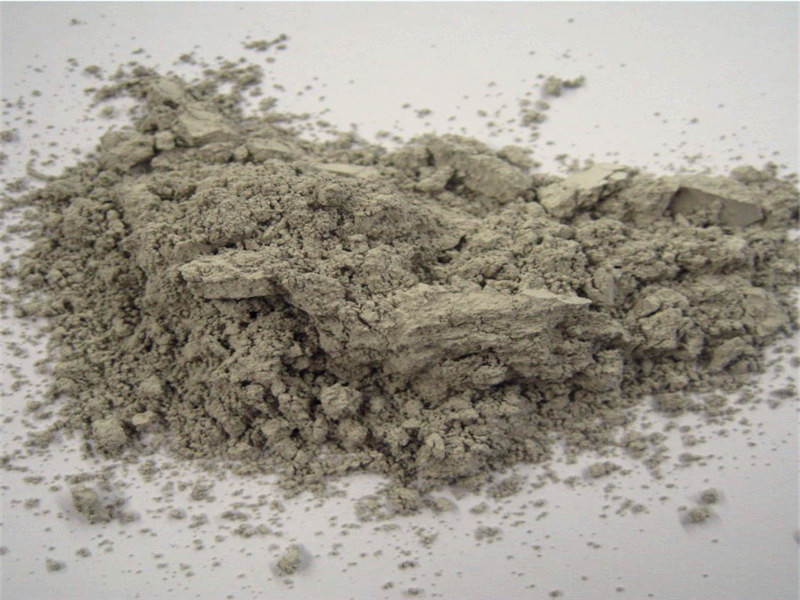
Reasons why green silicon carbide (GC) is well-suited for abrasive films, discs, polishing belts, and lapping slurries:
1. High hardness and excellent self-sharpening for stable cutting
With a Vickers hardness (HV) of approximately 2500–2800, green silicon carbide (GC) is harder than optoelectronic substrates such as optical glass, ceramic ferrules, and fused silica. Under grinding pressure, the particles fracture along cleavage planes, continuously exposing new, sharp cutting edges—preventing the particles from becoming rounded or slipping. When incorporated into abrasive films or belts, GC provides a consistent material removal rate and strong cutting force, making it ideal for the initial coarse grinding of fiber-optic ceramic ferrules and glass substrates, thereby increasing production efficiency. Compared to white fused alumina, GC offers a faster removal rate for the same particle size.
2. Sharp, angular particles with uniform crystal structure, ideal for coating processes
Green silicon carbide (GC) particles feature sharp, multi-faceted shapes, providing numerous cutting points. The particle size is highly controllable, allowing for precise classification into “W” series (micron-scale) specifications. When applied to a PET film substrate, the particles remain well-dispersed and protrude uniformly; unlike rounded particles, they do not “slip” within the adhesive layer. Furthermore, when formulated into a slurry, GC exhibits moderate suspension stability—resisting rapid settling or clumping—which facilitates the preparation of lapping fluids.
3. Excellent chemical compatibility with various adhesive and slurry systems
At room temperature, green silicon carbide (GC) is resistant to acids and alkalis. It does not react with water-based or oil-based lapping fluids, nor with acrylic or polyurethane-based adhesives. This ensures that the particles do not degrade, the adhesive layer does not yellow, and curing processes remain unaffected—making GC highly compatible with a wide range of abrasive film and polishing belt formulations.
4. Significant Cost-Performance Advantage
Compared to diamond micropowder, green silicon carbide (GC) offers a much lower cost, making it an ideal abrasive for high-volume, initial-stage (coarse) grinding. It can be used to produce cost-effective coarse-grinding lapping films, perfectly suited for high-stock-removal applications—such as the initial grinding of fiber-optic ferrules or the thinning of optical blanks—and enjoys strong market acceptance.
5. Excellent Thermal Conductivity and Low Heat Generation
During the grinding process, green silicon carbide (GC) generates less frictional heat. This minimizes the risk of thermal deformation in the workpiece and prevents the adhesive layer of the lapping film from overheating and softening, thereby extending the service life of the film.
In summary, green silicon carbide (GC) features high hardness, excellent self-sharpening properties, and sharp, angular particles, which ensure high cutting efficiency. It is chemically stable and highly compatible with coating resins and grinding fluids. With its superior cost-performance ratio, it is well-suited for the production of lapping films, abrasive belts, and grinding fluids used in the initial coarse-grinding stages for fiber-optic ceramic ferrules and optical substrates.