
Why is black silicon carbide used for grinding MLCC?
MLCC are made of barium titanate-based hard and brittle ceramics. After sintering, they have high hardness and fragile interlayer structure. The grinding process (beveling, deburring, and end face flattening) requires sufficient grinding force, minimal chipping, low contamination, controlled temperature rise, and controllable cost. Black silicon carbide perfectly meets these requirements and has irreplaceable advantages over white corundum, green silicon carbide, and diamond.
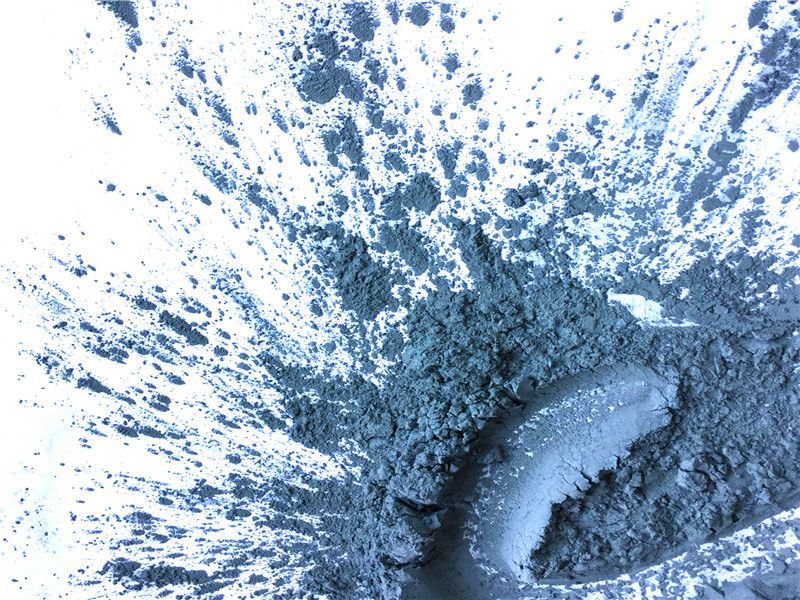
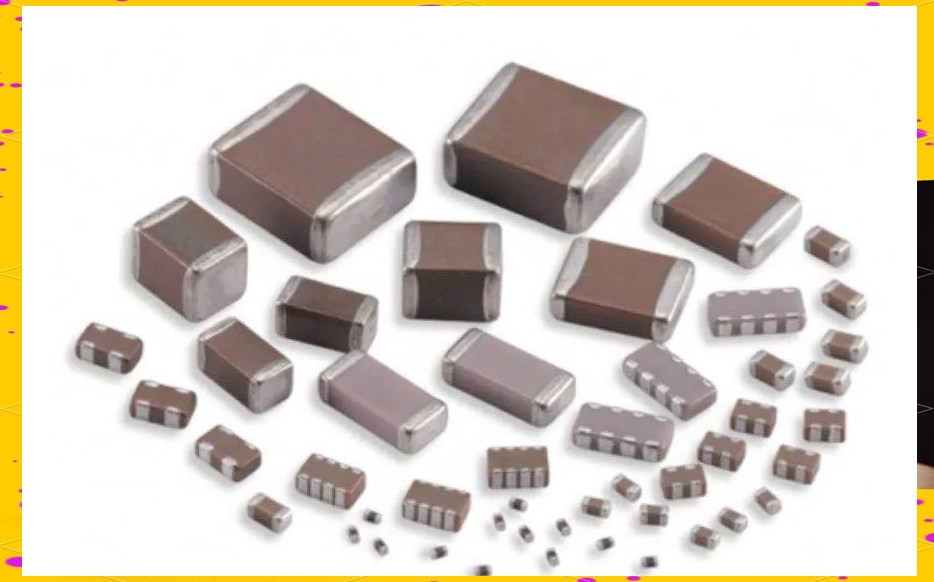
I. Black silicon carbide with matching hardness enables efficient cutting of barium titanate ceramics.
1. Black silicon carbide has a Mohs hardness of 9.0~9.2 and a microhardness of 2840~3320 kg/mm², which is much higher than that of brown fused alumina (Mohs hardness 8.9), and can easily cut MLCC barium titanate ceramics (Mohs hardness 8.5~9).
2. Black silicon carbide crystals have sharp edges and corners, allowing for rapid grinding to remove burrs, right angles, and sintering protrusions, significantly shortening chamfering processing time and resulting in mass production efficiency far exceeding that of alumina abrasives;
3. Black silicon carbide has better toughness than green silicon carbide: Black silicon carbide crystals are impact-resistant and not easily broken into fine powder in one go. During grinding, it has cutting force but will not excessively impact the thin stacked chip, which greatly reduces the failure of MLCC layer cracking, edge chipping, and internal electrode peeling.
II. Black silicon carbide has strong chemical inertness and hardly contaminates the electrical properties of MLCC
MLCC are extremely sensitive to metallic impurities (Fe, Al, Ca). Even trace amounts of these impurities can cause leakage current, capacity decay, and breakdown voltage.
1. Black silicon carbide is resistant to acids and alkalis at room temperature. It does not release metal ions in water-based polishing slurries during the chamfering process and will not introduce harmful impurities into the barium titanate medium.
2. Compared with alumina grinding balls/powder: long-term grinding will wear away and precipitate Al³⁺. Al ions penetrate into the ceramic grain boundaries and directly degrade the dielectric properties;
3. The black silicon carbide wear debris is still SiC and does not chemically react with the ceramic or nickel/copper internal electrodes. After cleaning, there is no residual pollution, ensuring the stability of the capacitor’s electrical parameters.
Ⅲ, black silicon carbide has good thermal conductivity and low thermal expansion, avoiding thermal damage to ceramics.
Grinding friction generates localized high temperatures, and thermal shock to the thin ceramic layer of MLCCs can easily cause hidden microcracks.
1. The thermal conductivity of black silicon carbide is much higher than that of corundum, allowing grinding heat to be quickly dissipated and preventing localized overheating of the chip;
2. Black silicon carbide has an extremely low coefficient of thermal expansion, resulting in a small difference in thermal deformation between the abrasive and the ceramic during the grinding process, reducing thermal stress cracks and improving the reliability of the finished product.
IV. Black silicon carbide exhibits stable self-sharpening properties, and its grinding efficiency does not decrease over long-term.
Black silicon carbide has moderate brittleness; as the abrasive grains become dull, they will naturally chip slightly, continuously revealing a brand-new, sharp cutting surface.
1. No need for frequent abrasive replacement; the chamfer roughness of the entire batch of MLCCs is uniform, and the end face consistency is good, ensuring sufficient electrode exposure during subsequent silvering and electroplating.
2. Unlike soft abrasives, which become smoother with use and can only be polished later, large burrs and protrusions cannot be removed.
V. Cost Advantages (Compared to Green Silicon Carbide)
Green silicon carbide has higher purity and slightly higher hardness, but it is 30% to 50% more expensive than black silicon carbide. It also has poor toughness and is easily broken upon impact, making it only suitable for high-precision polishing of cemented carbide and optical glass. MLCC chamfering is a coarse/medium grinding process, which does not require ultra-high purity green silicon carbide. Black silicon carbide fully meets the process requirements, significantly reducing the material costs for large-scale production.
Conclusion
MLCC is a hard and brittle thin laminate. Grinding requires rapid cutting of ceramic burrs while gently protecting the multi-layer structure from cracking and introducing electrical impurities. Black silicon carbide balances hardness, toughness, chemical stability and cost, and is the optimal abrasive for mass production chamfering/rough grinding of MLCC.
PS:The sizes of black silicon crbide micropowder from haixu abrsives:
Fepa Standard:F230-F1500
| Size | D50(um) | Size | D50(um) |
| F230 | 53.0±3.0 | F500 | 12.8±1.0 |
| F240 | 44.5±2.0 | F600 | 9.3±1.0 |
| F280 | 36.5±1.5 | F800 | 6.5±1.0 |
| F320 | 29.2±1.5 | F1000 | 4.5±0.8 |
| F360 | 22.8±1.5 | F1200 | 3.0±0.5 |
| F400 | 17.3±1.0 | F1500 | 2.0±0.4 |
JIS Standard:JIS#240-JIS#6000
| Size | D50(um) | Size | D50(um) |
| #240 | 57.0±3.0 | #1000 | 11.5±1.0 |
| #280 | 48.0±3.0 | #1200 | 9.5±0.8 |
| #320 | 40.0±2.5 | #1500 | 8.0±0.6 |
| #360 | 35.0±2.0 | #2000 | 6.7±0.6 |
| #400 | 30.0±2.0 | #2500 | 5.5±0.5 |
| #500 | 25.0±2.0 | #3000 | 4.0±0.5 |
| #600 | 20.0±1.5 | #4000 | 3.0±0.4 |
| #700 | 17.0±1.5 | #6000 | 2.0±0.4 |
| #800 | 14.0±1.0 |
P Standard:P240-P5000
| Size | D50(um) | Size | D50(um) |
| P240 | 58.5±2.0 | P1000 | 18.3±1.0 |
| P280 | 52.2±2.0 | P1200 | 15.3±1.0 |
| P320 | 46.2±1.5 | P1500 | 12.6±1.0 |
| P360 | 40.5±1.5 | P2000 | 10.3±0.8 |
| P400 | 35.0±1.5 | P2500 | 8.4±0.5 |
| P500 | 30.2±1.5 | P3000 | 6.7±0.5 |
| P600 | 25.8±1.0 | P4000 | 5.5±0.5 |
| P800 | 21.8±1.0 | P5000 | 4.0±0.5 |