
Silicon carbide:Breakthrough material in thermal conductivity
Silicon carbide includes black silicon carbide and green silicon carbide.
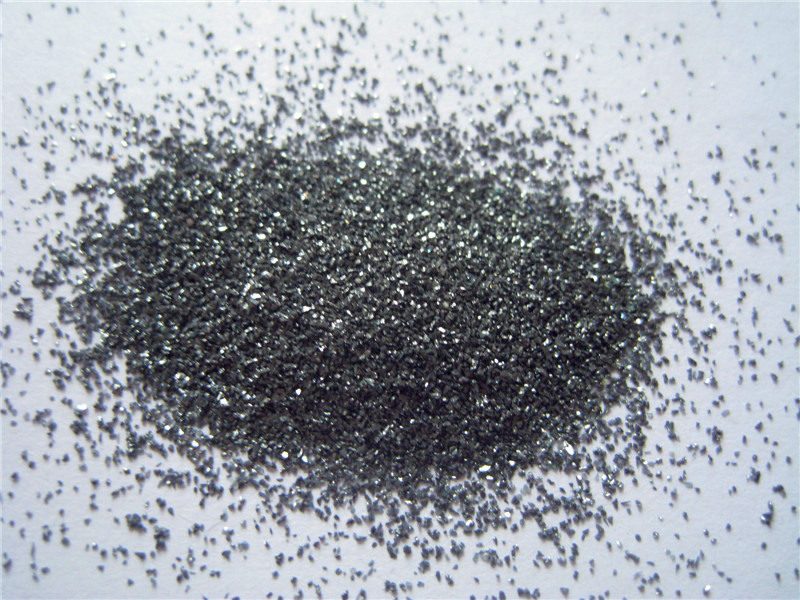
Black silicon carbide
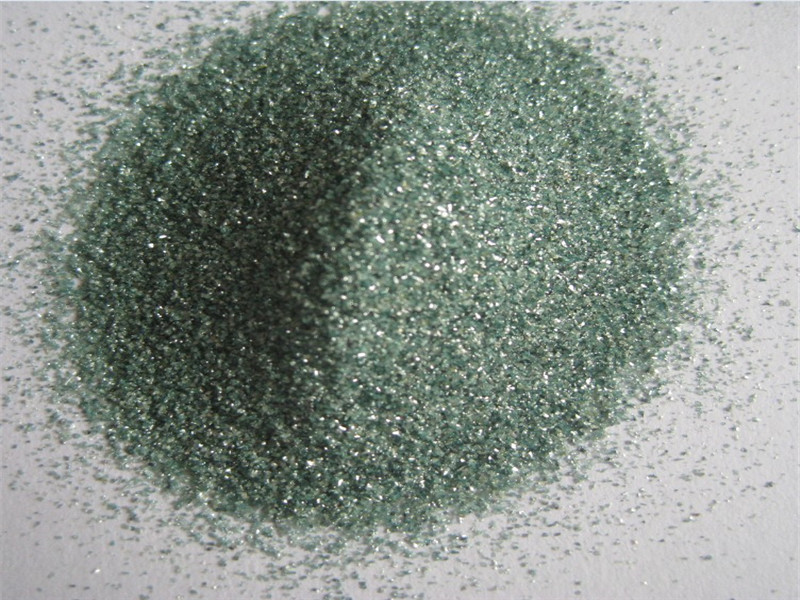
- silicon carbide:Natural hear expert
Silicon carbide (SiC) is not ordinary material! Its crystal structure resembles “atomic building blocks,” with carbon and silicon atoms arranged alternately to form an ultra-dense hexagonal lattice. This structure allows electrons to move more freely, maximizing thermal conductivity—reaching a thermal conductivity of 490 W/m·K (1.5 times that of copper and 3 times that of aluminum). Even more impressively, it remains stable at high temperatures; its thermal conductivity drops by only 10% at 1000℃, while metallic materials might fail at this temperature. This characteristic of “remaining unaffected by high temperatures and maintaining its thermal conductivity” makes it a promising candidate for heat dissipation.
- From the lab to real-world applications: The “hardcore” applications of silicon carbide
Silicon carbide’s superior thermal conductivity has made it shine in many fields:
Electronic heat dissipation: Power devices in 5G base stations and new energy vehicles can reach temperatures exceeding 200°C during operation. Using silicon carbide as the heat dissipation substrate allows for rapid heat dissipation, extending equipment lifespan by more than 30%.
Aerospace: Rocket engine nozzles and satellite electronic components need to operate under extreme temperatures. Silicon carbide composite materials are both thermally conductive and resistant to high-temperature corrosion, making them ideal materials for space travel.
Optoelectronic devices: LED chips and laser diodes are sensitive to temperature. Silicon carbide substrates can dissipate heat quickly, which can improve the luminous efficiency of the devices by 20% and double their lifespan.
- The “minor drawbacks” and “great future” of silicon carbide thermal conductivity
Of course, silicon carbide also has its drawbacks: it is extremely hard (Mohs 9.5), making it difficult to process and costing 3-5 times more than metals; it is also brittle and prone to cracking under impact. However, scientists are working to “tame” it—reducing brittleness and increasing toughness through nanotechnology and composite techniques; and using 3D printing technology to directly manufacture complex heat dissipation structures, reducing processing steps. In the future, as costs decrease, silicon carbide is expected to move from high-end applications to become the main heat dissipation technology for consumer electronics such as mobile phones and computers, making your devices cooler and more durable!