
Why Use Black Silicon Carbide Micropowder in Water-Based Coatings?
Water-based coatings use water as the primary dispersion medium (solvent), with resins either dissolved or dispersed within it. This distinguishes them from solvent-based coatings, which rely primarily on organic solvents such as xylene or ethyl acetate. By replacing the majority of organic solvents with water, these coatings are considered environmentally friendly.
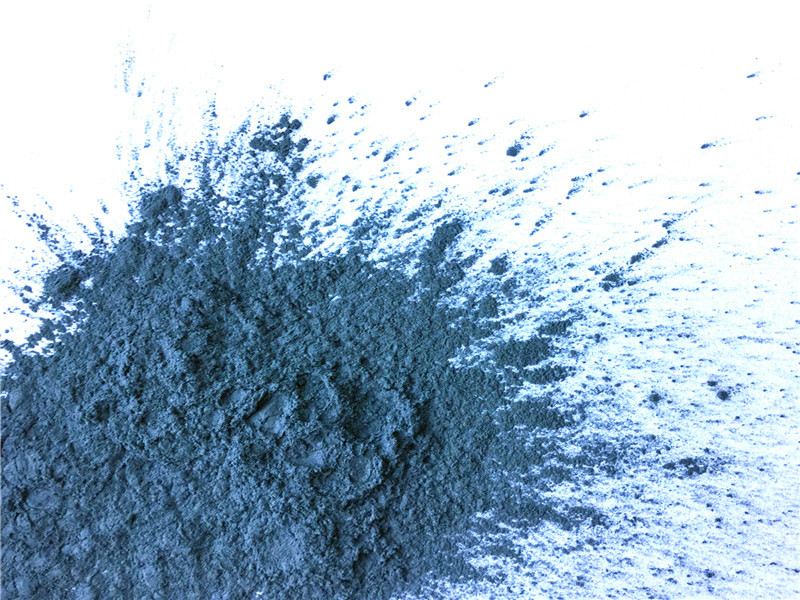
Black silicon carbide micropowder is produced by smelting raw materials—such as quartz sand, petroleum coke, and sawdust—at high temperatures in an electric resistance furnace. The resulting micropowder (ranging from 240 to 6000 mesh) undergoes acid washing, water rinsing, and overflow classification. This process ensures high purity and a concentrated particle size distribution. The material is characterized by high hardness, high thermal conductivity, excellent thermal and chemical stability, good self-sharpening properties, and semiconducting characteristics.
1. Exceptional Cost-Performance Ratio
Black silicon carbide possesses a hardness comparable to that of green silicon carbide and offers far superior wear resistance to common fillers like quartz powder, ground calcium carbonate, or talc. Yet, its procurement cost is significantly lower than that of green silicon carbide. It is an ideal choice for dark-colored, heavy-duty water-based wear-resistant flooring, heavy-duty anti-corrosion primers for steel structures, and erosion-resistant coatings for mining equipment, helping to manage formulation costs.
2. High Hardness, Self-Sharpening, and Wear Resistance Against Abrasion
With a Mohs hardness of 9.1–9.2, black silicon carbide particles feature sharp, angular edges that create a rigid, wear-resistant framework within the paint film. During friction or wear, the particles fracture to continuously expose fresh, sharp edges; this ensures a slow rate of wear degradation over time, making the material well-suited for environments subject to heavy traffic (such as vehicle movement) or erosion from abrasive particulate matter.
3. Excellent chemical inertness, suitable for water-based systems
Black silicon carbide exhibits resistance to salt spray, weak acids, and weak alkalis. It is chemically stable and, under normal conditions, does not react with water-based emulsions or cause them to break. Its particles fill the pores within a paint film, blocking the penetration of moisture and corrosive ions, thereby enhancing anti-corrosive sealing properties. Following hydrophilic modification, it achieves stable dispersion in aqueous phases, resisting agglomeration and sedimentation. Its moderate oil absorption value ensures that the consistency of the coating remains stable, preventing issues such as poor leveling during application.
4. Inherent black coloration and matte/flatting effect
Naturally black in color, black silicon carbide can reduce the amount of carbon black required in dark-colored paint systems. Furthermore, the light-scattering properties of its particles provide an inherent matte (flatting) effect, eliminating the need for additional matting agents. This makes it ideal for use in water-based industrial topcoats—such as those designed for a matte or frosted finish—as well as in anti-slip floor coatings. 5. Good Thermal Conductivity and High Thermal Stability
Black silicon carbide offers superior thermal conductivity compared to white fused alumina. It features a low coefficient of thermal expansion and high-temperature resistance, making it well-suited for dark-colored functional coatings—such as water-based high-temperature protective coatings and fire-retardant/thermal insulation coatings for lithium-ion batteries. Additionally, due to its semiconducting properties, it can be used in the formulation of water-based anti-static and wear-resistant coatings.
Black silicon carbide micropowder produced by Haixu Abrasives:
P: P240, P280, P320, P360, P400, P500, P600, P800, P1000, P1200, P1500, P2000, P2500, P3000, P4000, P5000
FEPA: F230, F240, F280, F320, F360, F400, F500, F600, F800, F1000, F1200
JIS: #240, #280, #320, #360, #400, #500, #600, #700, #800, #1000, #1200, #1500, #2000, #2500, #3000, #4000, #6000